From Rural Kerala to Global Tech: Mastering the "Architectural Ilities" in the Age of AI
Transforming candidates into leaders and founders.
lxisoft
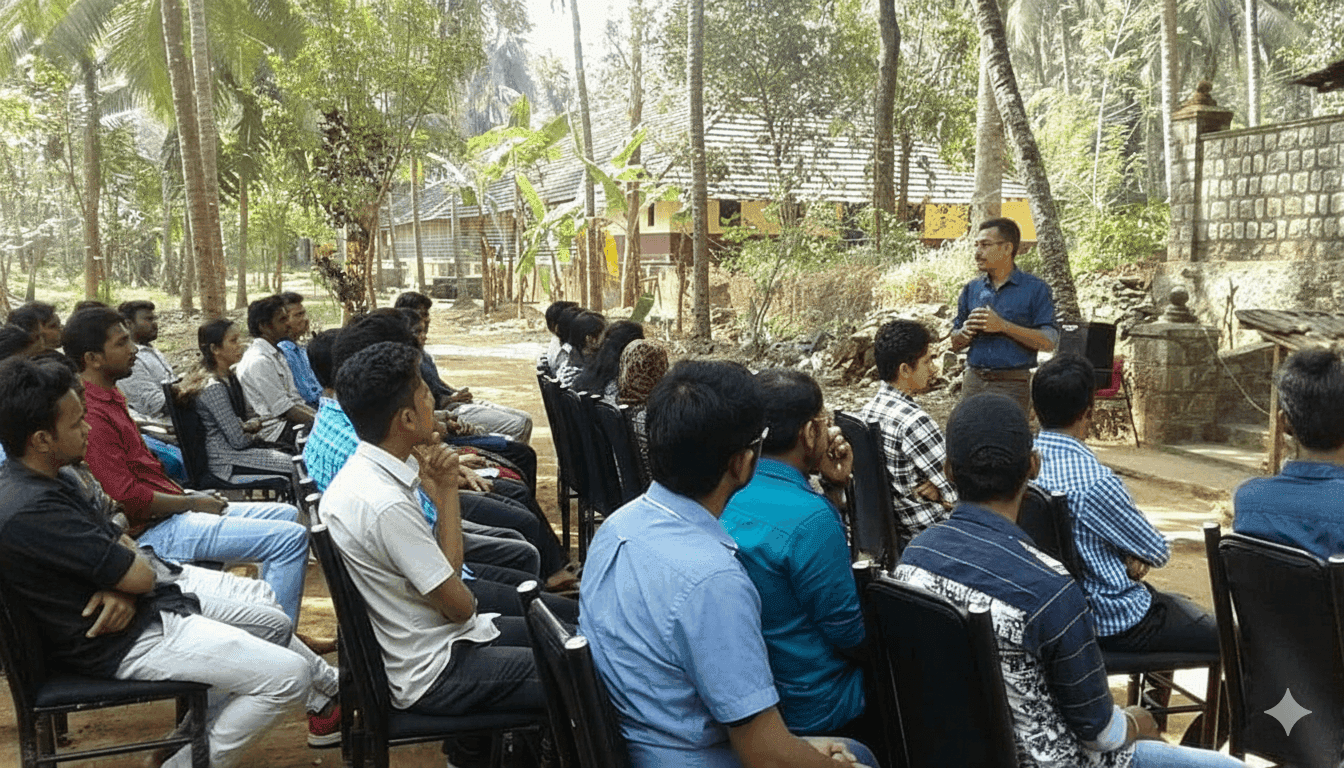
“At our hub in Palakkad, we aren't just training employees; we are "Coding the Coder"—transforming candidates from Kasargod, Wayanad, Calicut, Kottayam, and Coimbatore into leaders and founders.”
From Rural Kerala to Global Tech: Mastering the "Architectural Ilities" in the Age of AI
In 2026, AI can generate code in seconds. The challenge is no longer writing syntax — it is governing architecture.
Our internship is designed for the AI-assisted engineering era. We do not train interns to compete with AI in producing boilerplate. We train them to direct it.
Interns learn to:
-
Define architectural boundaries before generating code
-
Encode non-functional requirements (scalability, reliability, security, performance) into prompts
-
Design clean layering and domain models
-
Enforce testability and observability from day one
-
Review, refactor, and validate AI-generated output
-
Use RAG-enabled tools to stay repository-aware
-
Close the loop with automated testing and static analysis
We simulate real production environments — version control discipline, CI pipelines, containerized deployments, and structured code reviews.
In the AI “vibe coding” era, relevance comes from architectural thinking, systems reasoning, and engineering accountability.
Our internship ensures that AI becomes a productivity multiplier — not a crutch
At our hub in Palakkad, we aren't just training employees; we are "Coding the Coder"—transforming candidates from Kasargod, Wayanad, Calicut, Kottayam, and Coimbatore into leaders and founders.
1. The Onion Layers: Mastering Depth from the Inside Out
We teach software engineering as a series of layers. While AI stays on the surface (syntax), our interns peel back the layers to reach true architectural mastery.
Layer 1: The Core (Foundations)
Beyond basic syntax, we master Structured Programming, OOP, and AOP. We dive deep into Functions & Lambdas and embrace Data-Oriented Programming (DOP):
Immutability and Closed Type Hierarchies.
Pattern Matching and the strict Separation of Data and Logic.
Mastering Streams as the lifeblood of data flow.
Layer 2: The Structural Blueprint (Principles)
Here, logic meets discipline. You learn Design Patterns, SOLID/GRASP Principles, and the DRY/KISS methodologies. This layer ensures your code is readable by humans, not just executable by machines.
Layer 3: The Skeletal System (Architecture & Topography)
This is the "Decision Layer" where you weigh trade-offs. We cover:
Structural Patterns: Hexagonal (Ports & Adapters), Onion, and Clean Architecture.
Communication Flow: MVC, MVVM, MVI, and Event-Driven Architecture (EDA).
Topography: Monoliths vs. Modular Monoliths, Microservices, and Serverless/FaaS.
Modern Standards: Moving from the classic 12-factor to the 16-Factor App methodology.
Layer 4: The Outer Shell (The "Ilities")
This is the exhaustive professional standard that defines a Senior Architect: Scalability, Observability, Modularity, Extensibility, Maintainability, Testability, Reliability, Portability, Composability, and Security.
2. Your USP: The Human vs. The AI Vibe
The fear that AI will eliminate software jobs only applies to "transcribers." Your Unique Selling Proposition (USP) is Architectural Integrity. AI can write a function, but it cannot yet "feel" the Observability of a distributed system or ensure the Composability of a 16-Factor app. By mastering the core layers, you become the guardian of the system’s long-term survival. You are the one who ensures the "vibe" doesn't turn into a technical debt nightmare.
3. Real-World Engineering & "Coding the Coder"
Our interns don't work on "toy" projects. You will contribute to:
**FlutterWeaver: **Our proprietary engine for weaving complex backend logic into high-performance Flutter interfaces.
ServiceGenie: A logistics platform built on a Co-operative model for rural teams to run last-mile delivery servicing.
Internal & Open Source: High-stakes projects that demand professional-grade discipline.
Our ultimate goal is Incubation. We want you to grow from an employee to an employer. We provide the mindset and technical incubation for you to go back to your hometown and spin off an extension of our mission.
4. OCJP: The Vehicle to Polyglot Mastery
We use the Oracle Certified Java Programmer (OCJP) path as a rigorous "mental gym." While you build deep competence in the JVM's strict typing and memory management, Java is merely a vehicle.
This foundation allows for faster mastery over JS, TS, Python, and Dart. Our program is language-agnostic, focusing on language-independent concepts to develop Polyglot Apps.
The Professional Benchmark: For those with backlogs or incomplete degrees, the OCJP is a formidable equalizer. It levels with a graduate degree—and often surpasses it—by proving standardized, high-level technical rigor to global recruiters.
5. A Hub for the Changemakers
Whether you are from the local panchayats of Mankara, Mannur, and Lakkidi, or you've traveled from across the state, you are part of a movement. We are building a network of technical entrepreneurs who believe that world-class architecture can—and should—be built from the ground up in rural India.
Appendix: The 16-Factor Methodology
| Factor | Name | The "Architectural" Focus |
|---|---|---|
| 1–12 | The Classics | Codebase, Dependencies, Config, Backing Services, Build/Run/Release, Processes, Port Binding, Concurrency, Disposability, Dev/Prod Parity, Logs, Admin Processes |
| 13 | Observability | Moving beyond logs to distributed tracing and telemetry |
| 14 | Security | "Shift-Left" security — embedding encryption and RBAC into the code |
| 15 | Portability | Cloud-agnostic design (GCP, AWS, or local bare metal) |
| 16 | API-First | Defining the contract before the implementation |